Behind the Mask: Antisocial Personality vs. the Psychopath
Antisocial Personality vs. the Psychopath — what the difference really is, and what to watch for
- 1. Behind the Mask: Antisocial Personality vs. the Psychopath (you are here)
- 2. Wired Differently: The Genetics and Brain Science of the Psychopathic Mind
- 3. The Quiet Game: The Hidden Manipulation Playbook
Ask most people to picture a "psychopath" and you get one image: someone violent and unstable. The bar fights, the rap sheet, the wrecked jobs, the trouble that follows them everywhere. That person is real. But that picture is only one side of the coin — and honestly, it's the less dangerous side, because at least you can see them coming.
There is a second type. This person never throws a punch, never steals a car, never gets arrested. They go to law school or business school. They climb to the top of their field. They are charming, composed, and impressive. And underneath that polished surface, they operate with no conscience at all — viewing the people around them not as human beings but as pieces on a board, to be used for money, power, or status and then discarded.
Understanding how the same fundamental wiring produces both the chaotic street criminal and the calm corporate operator is the key to protecting yourself. It comes down to the difference between two ideas that get used interchangeably but mean very different things: Antisocial Personality Disorder and psychopathy.
First, let's untangle three confusing words
People throw around "sociopath," "antisocial," and "psychopath" as if they're synonyms. They aren't. Here is the clean version:
Antisocial Personality Disorder (ASPD) is the official psychiatric diagnosis — it's in the DSM-5, the manual clinicians use. Its criteria are built almost entirely around observable behavior: a long-standing pattern of disregarding and violating the rights of others, deceitfulness, impulsivity, aggression, recklessness, irresponsibility, and a lack of remorse, with evidence of conduct problems going back to childhood. Notice what that list emphasizes — what a person does. It's a behavioral footprint.
Psychopathy is not a formal DSM diagnosis. It's a personality construct, measured by a separate, well-validated tool — psychologist Robert Hare's Psychopathy Checklist-Revised (PCL-R). Where ASPD focuses on conduct, psychopathy describes something deeper: the internal emotional architecture of the person. The charm, the grandiosity, the pathological lying, and above all the hollow, missing core where conscience and empathy should be.
"Sociopath" is not a precise clinical term at all. It gets used loosely — sometimes for the same thing as psychopathy, sometimes to suggest a version shaped more by environment than by biology. Because it has no agreed clinical definition, clinicians tend to avoid it and speak instead of "antisocial personality" or "psychopathic traits."
Here's the relationship that ties it all together, and it surprises people: most individuals diagnosed with ASPD are not psychopaths. Hare's own work makes this point. ASPD is a wide net that catches a lot of impulsive, rule-breaking, troubled people. True psychopathy — the cold, conscienceless core — is a much smaller and more specific subset, estimated at roughly 1% of the general population.
The core distinction: a behavior pattern vs. an internal blueprint
The single cleanest way to hold the difference in your head:
ASPD describes what a person does. Psychopathy describes how a person is built.
This isn't just semantics — it's why the two profiles look so different in real life. And Hare's checklist gives us an elegant map of it. Decades of research have shown that the traits of psychopathy cluster into two distinct factors:
| Factor 1 — The Mask (Interpersonal & Affective) | Factor 2 — The Rap Sheet (Lifestyle & Antisocial) | |
|---|---|---|
| What it captures | The inner emotional deficit | The outward chaotic behavior |
| Signature traits | Superficial charm, grandiosity, pathological lying, manipulativeness, shallow emotions, callousness, no remorse, never takes responsibility | Impulsivity, irresponsibility, need for stimulation, parasitic living off others, poor self-control, early behavior problems, criminality |
| This is the part that… | the DSM's ASPD criteria largely miss | the DSM's ASPD criteria mostly capture |
Look at that table for a moment, because it explains everything that follows. The official ASPD diagnosis is very good at detecting Factor 2 and largely blind to Factor 1. It catches the visible wreckage but not the cold engine underneath it. That's exactly why a person can be a textbook psychopath — sky-high on Factor 1 — while having a spotless record that no ASPD checklist would ever flag.
The one concept that makes everything click: there are two kinds of empathy
This is the most important idea in the whole article, and it's where the popular understanding gets it wrong. People assume a psychopath simply "has no empathy." That's not quite right — and the truth is far more unsettling.
Empathy actually comes in two separate forms, and they live in different parts of the brain:
Cognitive empathy is the ability to read what another person is feeling and thinking — to look at your face and know you're anxious, lonely, flattered, or afraid. It's a perception skill, like radar.
Affective empathy is the ability to feel a share of it yourself — to be moved by your distress, to flinch when you flinch, to have your pain register as something that matters and needs to stop. It's the emotional brake that stops most of us from hurting people, because hurting them feels bad to us too.
Here is the crucial finding from the neuroscience: in psychopathy, cognitive empathy is intact — often excellent — while affective empathy is broken.
Sit with what that combination means. The skilled psychopath can read you with great precision and feels nothing about what they read. They can look across a table and know exactly what you're afraid of, what you long for, what will win your trust — and then feed it to you with total conviction, because none of it touches them. They have the radar without the conscience. That is not an absence of a skill; it is a weapon.
The brain research supports this picture with striking consistency. The leading neuroscientific model — developed largely by researcher James Blair — points to two structures:
- The amygdala, the brain's emotional alarm system, which normally fires in response to fear, threat, and the distress of others, and which teaches us to avoid things that lead to punishment. In people with high psychopathy scores, it shows reduced reactivity — particularly to other people's fear and to images of suffering.
- The ventromedial prefrontal cortex (vmPFC), which weighs consequences and guides decisions, and the white-matter connection between it and the amygdala (the uncinate fasciculus), which research has found to be measurably weaker in psychopathy.
In plain terms: the alarm bell that should ring when someone else is in pain — and the wiring that should connect that alarm to judgment and decision-making — is turned down. This dovetails with one of the oldest findings in the field, the "low-fear hypothesis": psychopaths simply do not experience the normal jolt of fear, anxiety, and anticipatory guilt that keeps the rest of us in line. They can stay glassy-calm in situations that would flood a typical person with dread.
A point of fairness and accuracy: this is the leading model, drawn from group studies — it is not a brain scan that diagnoses any individual, and biology is not destiny. But it explains, at a mechanical level, why the conscience these individuals lack was never really an option for them in the first place — and equally, why their choices about what to do with that wiring remain entirely their own responsibility.
Why the same wiring lands one person in prison and another in the corner office
Now we can answer the question we started with. Take that core emotional deficit — no affective empathy, no fear, no guilt — and ask what happens depending on the rest of the person.
Add a low frustration tolerance, poor impulse control, a chaotic upbringing, and limited options, and you get the "unsuccessful" type: high on Factor 2. This is the person who wants money right now and robs a store, who feels rage and starts a fight in a parking lot. Loud, messy, impulsive — and reliably caught by the justice system. This is the profile that fills the ASPD diagnosis and, frequently, the prison.
But add a high IQ, good impulse control, patience, a stable background, and an elite education, and the very same emotional deficit produces something else entirely: the "successful" psychopath. This person is high on Factor 1 — the mask — and low on the messy Factor 2. They figured out early that physical violence is a bad investment with a high chance of getting caught. So they turned the same predatory drive toward a far safer arena: they learned to weaponize the rules instead of breaking them.
Same goal, two completely different strategies:
| Life Goal | The "Unsuccessful" Type (high Factor 2) | The "Successful" Type (high Factor 1) |
|---|---|---|
| Wants money | Robs a store. Wants the cash now. | Goes to business or law school, climbs the ladder, and engineers complex, technically-legal schemes that quietly move millions. |
| Feels wronged | Explodes — yells, throws things, swings. | Smiles, notes your weak spot, and dismantles your reputation over the next six months from behind a closed door. |
| In relationships | Volatile, unreliable, walks out on obligations. | Plays the ideal partner, colleague, or neighbor — mimicking warmth flawlessly — until you've served your purpose, then drops you without a flicker. |
This isn't a fringe theory. In a well-known study by Paul Babiak, Craig Neumann, and Robert Hare, 203 high-potential executives enrolled in corporate management programs were assessed with the PCL-R. Roughly 4% scored in the psychopathic range — about three to four times the rate in the general population. Tellingly, the high scorers were rated as gifted in charisma, communication, and "strategic thinking," yet poor on actual responsibility and performance. Their gift was impression, not substance — and it kept getting them promoted anyway.
One honest caveat, which Hare himself insists on: this does not mean boardrooms are full of psychopaths, or that ambitious, tough, or successful people are suspect. Most are not. The point is narrower and more useful — that certain high-stakes, high-reward environments don't screen these traits out; they sometimes mistake them for leadership and wave them right in.
Why certain fields quietly reward this mind
Some have argued that certain high-pressure fields may fail to screen out — and occasionally reward — such traits, though this remains a hypothesis rather than a well-established finding. The argument is that a cold, calculating, fearless person may have advantages in arenas like high finance, certain corners of corporate management, litigation, and politics, for three proposed reasons:
Grace under pressure that isn't really grace. Because their threat-and-fear circuitry runs quiet, they stay genuinely calm in moments that would make a normal person's hands shake. We read that composure as confidence and competence. Often it's just the absence of fear.
Decisions without the weight. A typical leader feels sick laying off thousands of people. The successful psychopath experiences it as numbers on a spreadsheet and sleeps perfectly, because the human cost simply doesn't register as cost. In the short term, that can look like decisiveness.
A predator's read on people. That intact cognitive empathy — the radar — lets them sit across from a client, a board, or a jury, instantly sense what that person needs to hear, and deliver it with flawless sincerity, unburdened by any inner voice saying this is a lie.
What to actually watch for
This is the part you can use. Forget the movie villains — the genuinely dangerous ones in everyday life don't look sinister. So here's what does give them away.
The pity play — the single most reliable tell. This comes from Dr. Martha Stout, a psychologist who spent twenty-five years listening to people describe how these individuals invaded their lives. She found that the giveaway is not menace or a creepy vibe — it's an appeal to your sympathy. The reliable red flag is a specific combination: someone who repeatedly behaves badly or hurts people, and who repeatedly campaigns for your pity. When you find yourself making excuses for a person who keeps doing real damage — "but they've had such a hard time" — pause hard. A conscienceless person learns early that pity lowers your defenses faster than charm or fear ever could.
Charm that's a little too smooth, too fast. Effortless, polished, flattering — and somehow always aimed at what you want to hear. Real warmth has friction and imperfection. The practiced version is frictionless.
The calm liar. This is one of the oldest clinical observations, going back to psychiatrist Hervey Cleckley, who first mapped this personality in 1941. When most people lie, something leaks — a flicker of nervousness, a tell. The psychopath lies fluently and without anxiety, and if you catch them, they're unbothered and pivot smoothly, sometimes laughing it off as a joke. Cleckley described a chilling gap between their words and their actual feelings — they can say "I love you" or "I'm so sorry" with perfect conviction while the words mean nothing inside.
A trail of used people. One ugly story might be bad luck. A pattern — a series of exes, partners, employees, or friends who all somehow ended up betrayed, drained, or discarded — is data. Look at the wake behind a person, not just the face in front of you.
The slow erosion of your own reality. If, over time around someone, you find yourself increasingly confused, doubting your memory, apologizing for things you didn't do, and feeling like you're the problem — that disorientation is itself a warning sign. Manipulation often works by quietly rewriting your sense of what happened.
Words that never become actions. Grand promises, big plans, sincere apologies — that consistently evaporate. Watch what a person does over months, not what they say in the moment. The mismatch is the message.
A necessary word of caution
Because this material is genuinely useful, it's also genuinely easy to misuse. So, plainly:
Most difficult, selfish, narcissistic, or even cruel people are not psychopaths. Plenty of people are immature, wounded, anxious, or just unkind without lacking a conscience. The traits described here exist on a spectrum, and having one or two of them on a bad day means nothing. True psychopathy is rare and specific.
This article is not a diagnostic tool, and neither are you. Diagnosis takes a trained professional, structured assessment, and real history — not a checklist read on the internet about your ex, your boss, or your in-law. Slapping the label "psychopath" on someone is a serious act that can cause real harm when it's wrong.
So use this knowledge for the one thing it's actually good for: protecting yourself. Not to diagnose, label, reform, or out-argue anyone — those efforts fail with these individuals anyway — but to recognize a pattern early, trust your own perception, and disengage. As Stout puts it: when someone like this is drawing you into their game, the winning move is simply not to play.
The bottom line
The instinct that started this is exactly right, and the science backs it up: a clean criminal record and an impressive résumé are not evidence of a conscience.
A person born with a quiet alarm system and a missing emotional brake didn't choose that wiring — but as an adult, what they do with it is entirely their own. The lesson worth carrying is that the most dangerous people among us rarely look the part. They don't wear ski masks or start fights. More often they wear well-cut suits, hold prestigious degrees, speak with immaculate charm — and look at everyone around them as a piece to be played.
That, in the end, is what Cleckley meant by his unforgettable title for this whole phenomenon: the mask of sanity.
References & further reading
- Cleckley, H. The Mask of Sanity (1941) — the original clinical description of psychopathy and the source of the "mask" concept.
- Hare, R. D. Without Conscience: The Disturbing World of the Psychopaths Among Us (1993) — the accessible classic by the creator of the PCL-R.
- Babiak, P. & Hare, R. D. Snakes in Suits: When Psychopaths Go to Work (2006) — on the "successful" / corporate psychopath; source of the executive-prevalence research.
- Stout, M. The Sociopath Next Door (2005) — the everyday manipulator and the "pity play"; written for a general audience.
- Blair, R. J. R. Work on the amygdala, ventromedial prefrontal cortex, and the Integrated Emotion Systems model — the neuroscience of the affective-empathy and low-fear deficits.
This article is for general education only and is not a substitute for professional evaluation. If you are dealing with someone whose behavior is harming you, consider speaking with a qualified mental health professional.
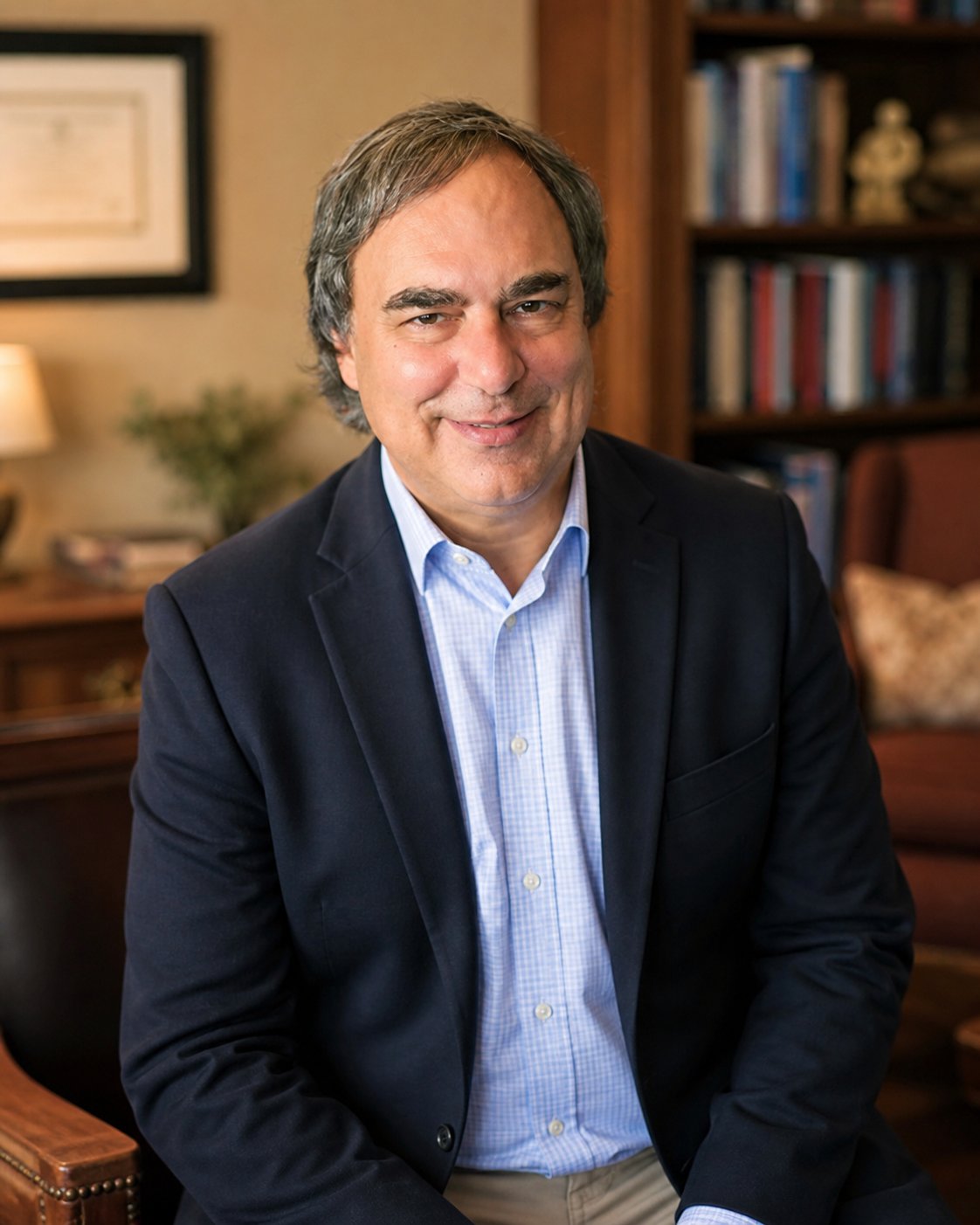
About Dr. Arnold G. Shapiro, MD
Dr. Arnold Shapiro is a board-certified psychiatrist serving Cincinnati, Ohio and Northern Kentucky. With over 35 years of clinical experience, he specializes in ADHD, anxiety, depression, bipolar disorder, and OCD treatment for both children and adults. Dr. Shapiro is known for his thorough evaluation process and compassionate, family-centered approach to psychiatric care.
Ready to Take the Next Step?
Schedule a comprehensive evaluation with Dr. Shapiro.